Open your wardrobe on a busy Monday morning.
What happens next?
If you’re moving hangers around trying to find one shirt, pulling folded clothes out from underneath a pile, searching three drawers for a belt, or wondering where you kept your favourite pair of shoes, your wardrobe may have plenty of storage—but not necessarily the right storage.
That distinction is shaping wardrobe design in 2026.
Homeowners are no longer looking at wardrobes as large cupboards occupying one bedroom wall. They want storage systems designed around their routines, room dimensions, clothing habits, interior style, and available space.
A well-planned wardrobe should make a bedroom feel calmer, not more crowded. It should give everyday items logical places, keep frequently used belongings easily accessible, and use awkward corners intelligently.
This is why working with a professional Wardrobe Designs in Raigarh can make such a noticeable difference. Instead of beginning with a standard wardrobe template, thoughtful design begins with questions: Who will use it? What needs to be stored? How much hanging space is required? Are there sarees, suits, accessories, luggage, shoes, or seasonal clothes? How much floor space can comfortably be used?
The answers determine the design.
And in 2026, the most exciting wardrobe trends are combining that functionality with cleaner aesthetics, smarter internal organization, beautiful finishes, integrated lighting, and personalized details.
If you’re planning a new bedroom or renovating an existing one, here are the wardrobe ideas worth considering this year.
Why Wardrobe Design Has Changed So Much
Think about bedrooms from a couple of decades ago.
Storage requirements were relatively straightforward. A cupboard generally had a hanging section, shelves, a locker, and perhaps a couple of drawers.
Today’s lifestyles are different.
A single person’s wardrobe might need to accommodate:
- Formal clothes
- Casual wear
- Ethnic wear
- Sportswear
- Winter clothing
- Shoes
- Bags
- Watches
- Jewellery
- Belts
- Ties
- Accessories
- Bedding
- Luggage
For couples, these requirements multiply.
At the same time, homeowners increasingly want visually clean bedrooms with fewer objects left outside.
That means the wardrobe has to work harder without making the room feel heavier.
A skilled Wardrobe Designer in Raigarh therefore doesn’t simply calculate how many shelves can fit inside a rectangular box. The designer considers how those shelves will actually be used every day.
That shift—from storage volume to storage experience—is one of the defining trends of 2026.
1. Floor-to-Ceiling Wardrobes Are Becoming the New Standard
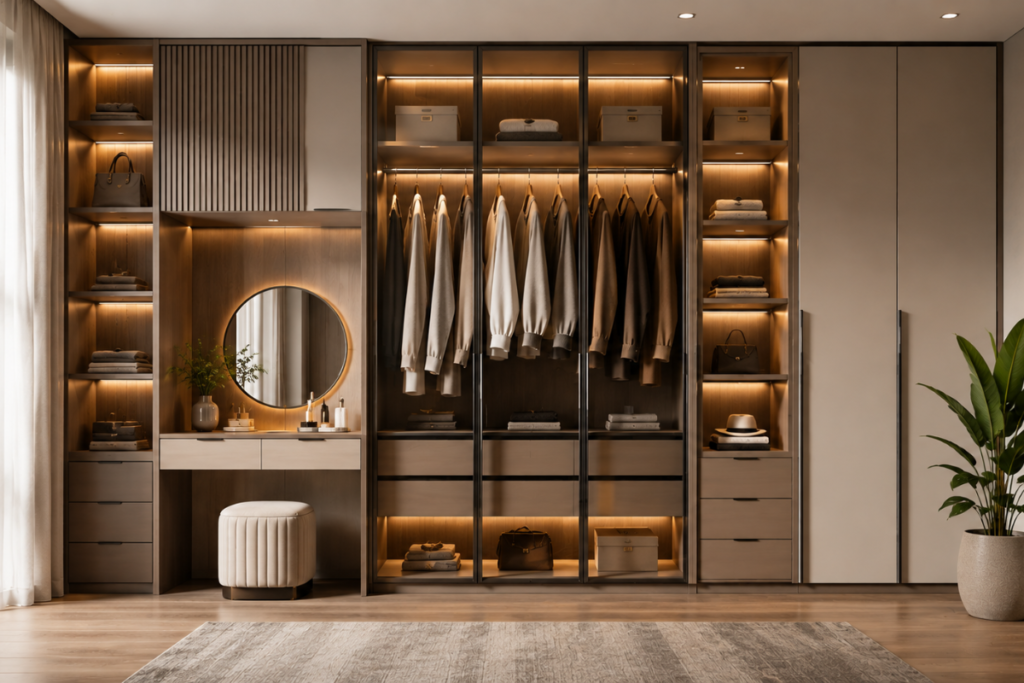
One of the strongest wardrobe trends is the move toward full-height designs.
Traditional wardrobes often leave an unused gap between the top of the cabinet and ceiling. Over time, that space becomes a dust collector or an awkward place for suitcases and storage boxes.
Floor-to-ceiling wardrobes use that vertical space more intelligently.
The uppermost cabinets can hold less frequently used items such as:
- Suitcases
- Seasonal blankets
- Extra bedding
- Winter clothes
- Travel bags
- Occasionally used household items
Meanwhile, everyday clothes remain within comfortable reach.
This creates a more organized room and gives the wardrobe a built-in architectural appearance.
Visually, full-height wardrobes can also make the wall feel taller and more cohesive when proportions are handled correctly.
2. Sliding Wardrobes Continue to Dominate Compact Bedrooms
Sliding wardrobes aren’t disappearing in 2026.
They’re becoming more refined.
The biggest practical advantage is simple: sliding doors don’t require clearance space in front of the wardrobe.
Imagine a bedroom where the distance between the bed and wardrobe is limited.
With hinged doors, you need enough space to open the shutter comfortably while still being able to walk around the room.
Sliding shutters move horizontally instead.
For compact bedrooms, that can significantly improve usability.
A Top Wardrobes Designer in Raigarh may recommend sliding systems where circulation space is limited, particularly in apartments or rooms where every inch matters.
Modern sliding wardrobes can also incorporate:
- Large mirrors
- Glass finishes
- Textured panels
- Matte surfaces
- Wood-inspired finishes
- Minimal profiles
The result can feel far more sophisticated than the bulky sliding cupboards people may remember from older interiors.
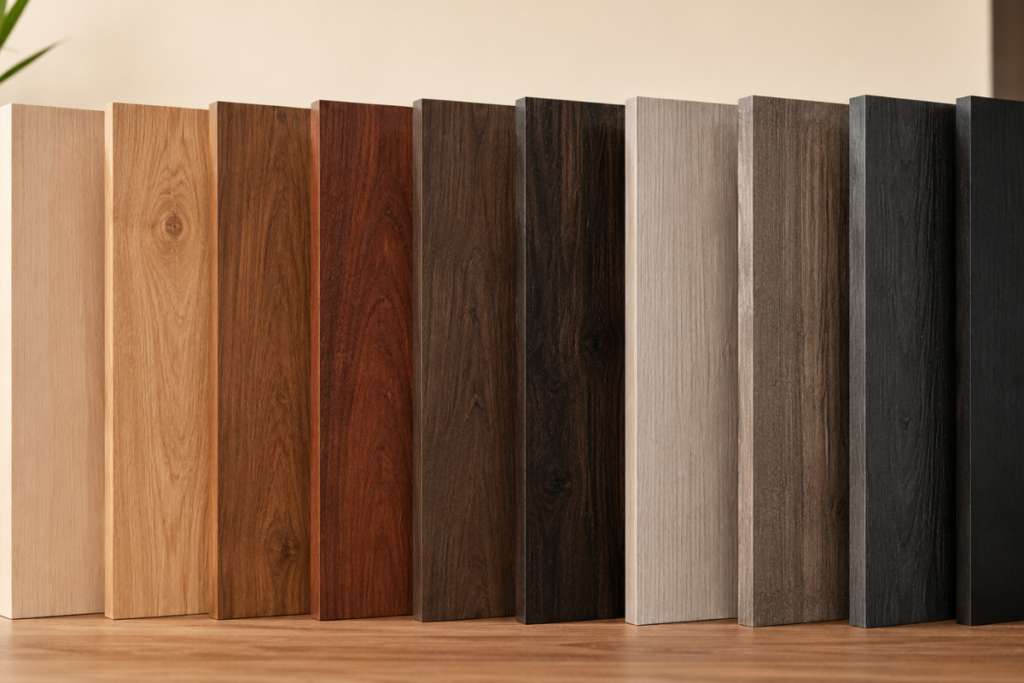
3. Wood Finishes Are Getting More Refined
Wood-inspired wardrobes remain popular because they immediately add warmth.
But the trend has shifted away from overly busy grains and excessively dark finishes.
Designers are increasingly using more refined wood textures, often paired with solid neutral colours.
For example:
Wood + beige
Wood + grey
Wood + off-white
Wood + glass
The combination prevents the wardrobe from looking too heavy.
A full wardrobe made entirely from dark wood can visually shrink a compact bedroom. Using wood strategically—perhaps on selected panels, niches, handles, or central sections—creates warmth without overwhelming the space.
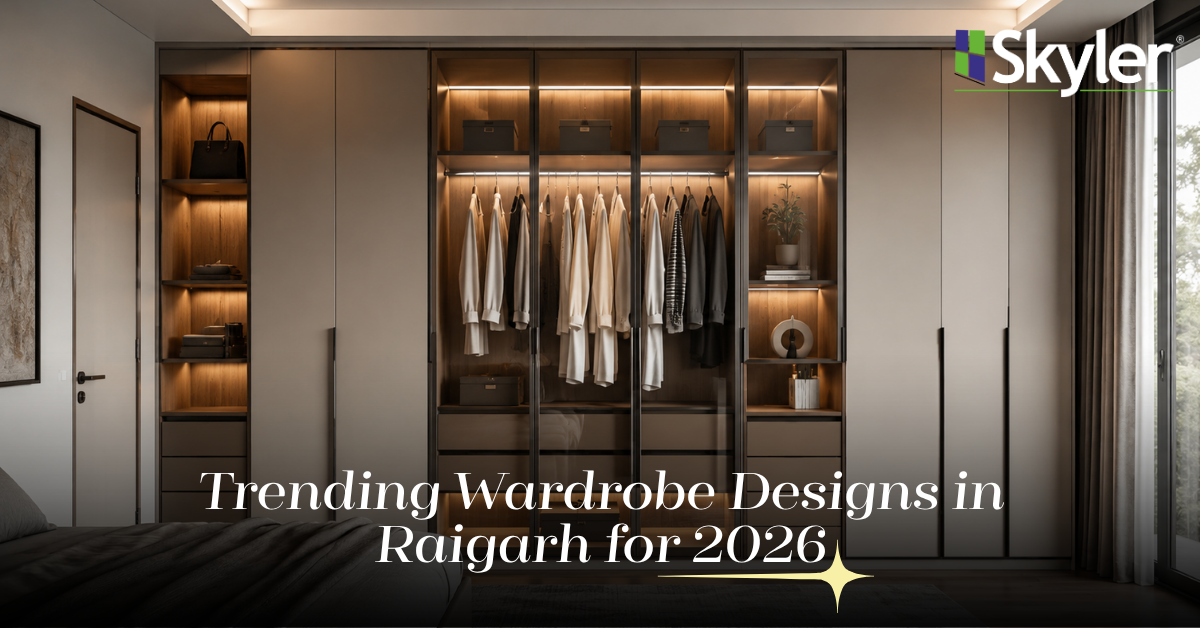
4. Wardrobe Lighting Is Becoming Functional, Not Decorative
Have you ever switched on your bedroom light and still struggled to distinguish a black shirt from a navy one inside the wardrobe?
That’s exactly the problem integrated wardrobe lighting solves.
Internal lighting is increasingly being treated as a practical feature rather than a luxury add-on.
Strategically positioned lights can illuminate:
- Hanging sections
- Shelves
- Drawers
- Accessory compartments
- Display areas
Sensor-based lighting can make the experience even smoother, with illumination activating when the wardrobe opens.
The key is thoughtful placement.
Poorly positioned lighting can create shadows or glare.
A professional Wardrobe Designs in Raigarh can plan lighting alongside the internal layout rather than trying to add it after the wardrobe is completed.
5. His-and-Hers Wardrobes Are Becoming More Personalized
For couples, simply dividing the wardrobe exactly in half isn’t always the smartest solution.
One person may need more hanging space.
Another may need additional drawers.
Someone may own several sarees or suits.
The other might need dedicated storage for formal shirts, trousers, watches, and belts.
A personalized wardrobe should respond to those differences.
Imagine designing the internal layout before discussing finishes.
One side could include double hanging rails for shirts and trousers.
The other might feature longer hanging space for dresses or ethnic wear.
Shared upper storage can accommodate luggage and bedding.
Drawers can be divided according to individual needs.
That’s a much smarter solution than creating identical sections simply for symmetry.
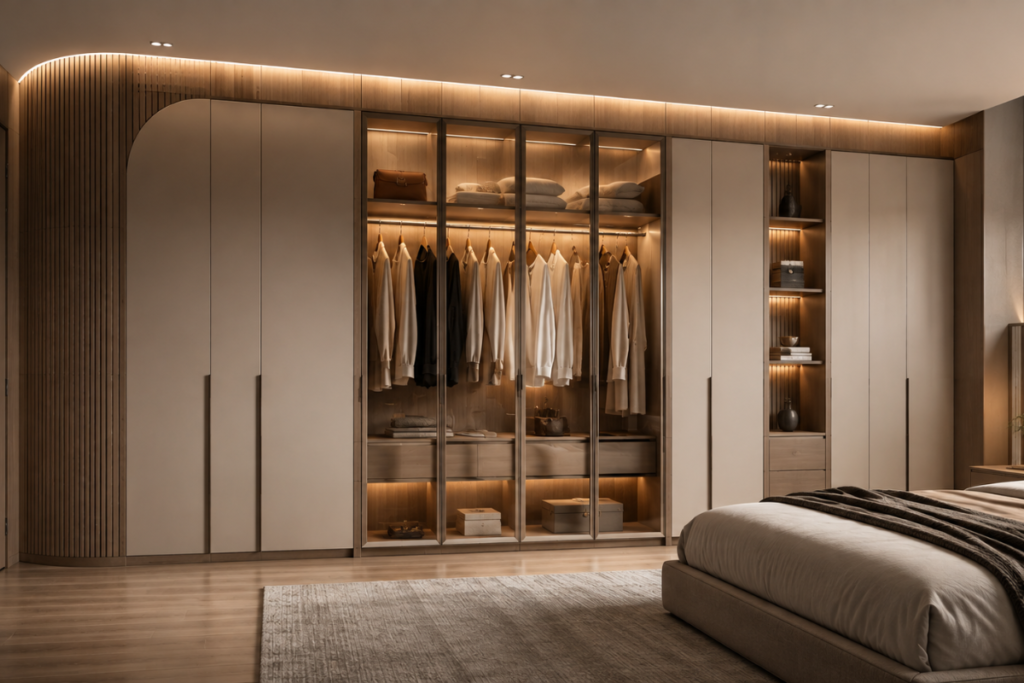
6. Wardrobes Are Becoming Part of the Bedroom Architecture
One of the most significant design changes is conceptual.
A wardrobe is no longer being treated as furniture placed against a wall.
It’s increasingly designed as part of the room itself.
The wardrobe may align visually with:
- Bedside panels
- Wall mouldings
- TV units
- Study desks
- Dressing areas
- Ceiling details
- Lighting
This creates continuity.
Instead of having five separate furniture pieces competing for attention, the bedroom feels intentionally designed.
This integrated approach is often what separates an ordinary wardrobe from the Best Wardrobes Design in Raigarh for contemporary homes.
7. Hidden Storage Is Becoming More Valuable
Modern bedrooms look clean because they hide complexity.
Behind those minimal wardrobe shutters may be dedicated spaces for:
- Suitcases
- Documents
- Extra bedding
- Seasonal clothes
- Valuables
- Ironing accessories
- Laundry
- Less frequently used belongings
The goal isn’t simply to create more storage.
It’s to prevent rarely used items from occupying the most convenient areas.
A simple rule works surprisingly well:
Everyday items should be easiest to reach.
Occasionally used belongings can go higher or deeper.
Rarely used items belong in long-term storage zones.
This hierarchy makes a wardrobe dramatically easier to live with.
How to Plan Your Wardrobe Before Meeting a Designer
Before searching for a Wardrobe Designer in Raigarh, spend a little time understanding what you actually own.
Open your existing wardrobe.
Look carefully.
What causes the most frustration?
Not enough hanging space?
Too few drawers?
Shoes everywhere?
No place for luggage?
Shelves that are too deep?
Accessories constantly getting lost?
Write those problems down.
Then think about what you want the new wardrobe to solve.
This gives your designer useful information rather than starting the meeting with:
“Bas ek achha sa wardrobe bana do.”
Good design begins with a good brief.
Sliding vs Hinged Wardrobe: Which Is Better?
Neither option is universally superior.
Choose Sliding Doors When:
Your bedroom has limited space between the bed and wardrobe.
You prefer large, uninterrupted panels.
You want a contemporary aesthetic.
Consider Hinged Doors When:
There is adequate opening clearance.
You prefer easier access to multiple sections simultaneously.
Your design concept suits traditional shutters.
The correct choice depends on your room.
A Top Wardrobes Designer in Raigarh should assess dimensions and movement before recommending one system over another.
Never select a shutter style purely because it’s trending.
Frequently Asked Questions about Wardrobe Designs in Raigarh
1. What wardrobe styles are trending in 2026?
Floor-to-ceiling wardrobes, minimal handleless shutters, sliding systems, warm neutral finishes, wood combinations, integrated lighting, glass accents, internal organizers, and wardrobe-dressing combinations are among the prominent trends for 2026.
2. How do I choose a Wardrobe Designer in Raigarh?
Look for someone who evaluates your room dimensions, storage requirements, lifestyle, budget, materials, hardware, and overall interior style before proposing a design. A good designer should discuss functionality as seriously as appearance.
3. Are sliding wardrobes better for small bedrooms?
Sliding wardrobes can be particularly useful in compact rooms because their shutters don’t require opening clearance in front. However, the final choice should depend on room dimensions and usage preferences.
4. Which wardrobe colour is best for a small bedroom?
Light neutrals such as off-white, beige, greige, soft grey, and lighter wood finishes can help create a visually lighter space. Mirrors can also contribute to a greater sense of openness.
5. What makes a Top Wardrobes Designer in Raigarh different?
Strong wardrobe design goes beyond appearance. A professional designer should understand ergonomics, internal storage planning, materials, hardware, room proportions, lighting, circulation, and the household’s actual storage habits.
Conclusion: The Best Wardrobe Is the One Designed Around You
Wardrobe trends will continue changing.
A particular colour may dominate 2026 and disappear a few years later. New finishes will enter the market. Hardware will improve. Glass styles will evolve. Minimalism may become warmer, bolder, or more decorative.
But one principle isn’t going anywhere:
A wardrobe should make your life easier.
The most successful wardrobe isn’t necessarily the biggest or most expensive.
It’s the one where you know exactly where everything belongs.
Your everyday clothes are easy to reach.
Your shoes aren’t competing with your luggage.
Your accessories don’t disappear inside random drawers.
Your ethnic wear has adequate space.
And when the shutters close, the wardrobe feels like a natural extension of the bedroom rather than a giant box occupying one wall.
That’s why choosing a professional Wardrobe Designer in Raigarh is about more than selecting colours from a catalogue. Good design requires understanding your lifestyle first and translating those needs into practical storage.
Whether you’re searching for a Top Wardrobes Designer in Raigarh or exploring ideas for the Best Wardrobes Design in Raigarh, focus on thoughtful planning, internal organization, quality hardware, appropriate materials, and a design that suits your actual room.
For homeowners looking to create personalized interiors in Raigarh, Skyler World can be considered when exploring wardrobe solutions that balance contemporary aesthetics with practical storage planning.
If you’re planning a wardrobe in 2026, don’t begin by choosing the shutter colour. Begin by opening your current wardrobe and identifying everything that frustrates you about it. Take that list to your designer, discuss your routine honestly, review the internal layout carefully, and only then move toward materials and finishes.
A beautiful wardrobe can transform a wall. A thoughtfully designed wardrobe can transform the way you use your bedroom every single day.